

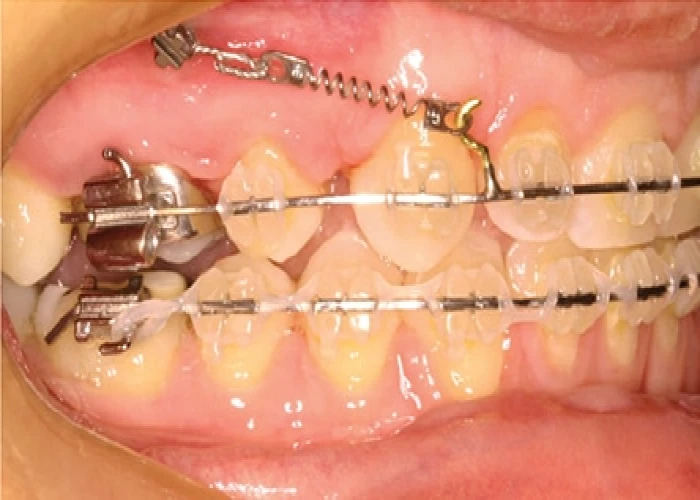
Temporary Anchorage Devices (TADs) are small, screw-like devices used in orthodontics to provide stable anchorage for moving teeth during treatment. Unlike traditional braces, which rely on the teeth themselves for anchorage, TADs are placed directly into the bone of the mouth, typically in areas such as the palate, jawbone, or near the roots of teeth. This creates a secure point of attachment for orthodontic appliances, enabling precise tooth movements without affecting other teeth.
TADs are primarily used in complex orthodontic cases, such as correcting bite issues (overbite, underbite), space closure, or tooth rotations. They allow for more controlled and efficient movements, reducing the need for extractions or the use of headgear. The devices are temporary, typically remaining in place for several months, and are removed once the desired tooth movement is achieved. TADs are minimally invasive, and their use has revolutionized modern orthodontics by enabling more advanced treatments with greater predictability and efficiency.