

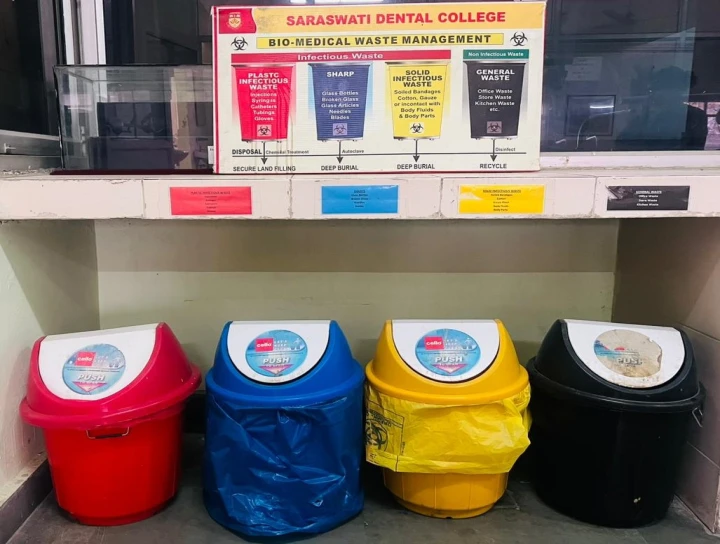
Biomedical waste management in the department involves several key steps:
Segregation: Properly separate waste into categories like infectious, sharp, non-infectious, and so on, using color-coded bins or containers to prevent cross-contamination.
Storage: Use secure, labeled containers to store segregated waste temporarily. Ensure these containers are leak-proof and easily accessible for disposal personnel.
Disposal: Follow local regulations for disposing of biomedical waste. This often involves working with certified waste management companies to safely transport and dispose of the waste through methods like autoclaving, incineration, or other approved processes.
Training: Regularly train staff on proper waste segregation, handling, and disposal procedures to maintain a safe environment and prevent accidents or infections.
Documentation: Maintain accurate records of waste generation, segregation, and disposal to comply with regulations and ensure accountability.
Implementing these steps ensures a safer environment for patients, staff, and the community while adhering to legal and environmental guidelines for waste management.
No Any Replies to “Biomedical Waste management”
Leave a Reply