

Foramen Magnum as a Tool for Sexual Dimorphism
Sexual dimorphism refers to the systematic differences in size, shape, and morphology between males and females of the same species. In forensic anthropology and medicolegal investigations, determination of sex from skeletal remains is a fundamental step in establishing biological identity. When the pelvis or complete skeleton is unavailable or fragmented, the skull serves as a valuable alternative. Among cranial structures, the foramen magnum has gained importance as a reliable indicator of sexual dimorphism due to its relative resistance to postmortem damage and ease of identification.
The foramen magnum is a large oval opening located at the base of the skull, transmitting vital neurovascular structures such as the medulla oblongata, vertebral arteries, and spinal accessory nerves. Its protected anatomical position makes it less susceptible to trauma and environmental degradation compared to other cranial features. Additionally, the foramen magnum completes its growth early in life, which reduces variability related to age and enhances its forensic reliability.
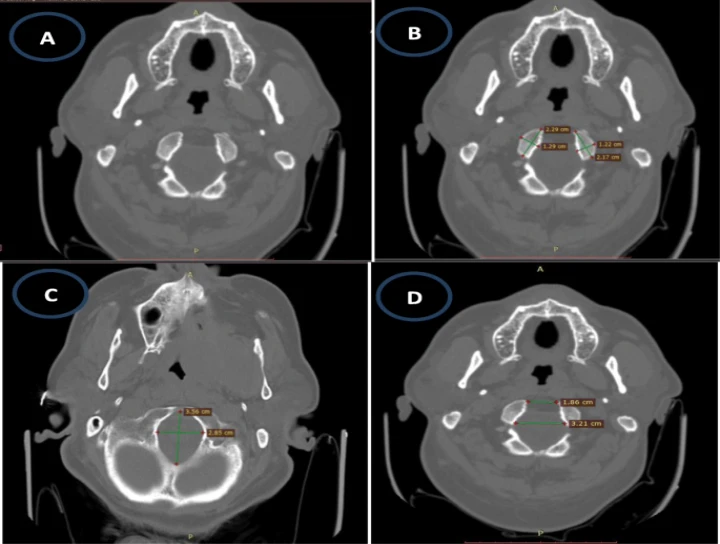
Morphometric analysis of the foramen magnum involves assessment of parameters such as anteroposterior diameter, transverse diameter, circumference, area, and shape index. Numerous studies have demonstrated that these dimensions are generally larger in males than in females, reflecting overall differences in cranial and skeletal robusticity. The anteroposterior diameter and area of the foramen magnum have been shown to exhibit the highest degree of sexual dimorphism, making them particularly useful in gender determination.
Advancements in imaging techniques, including computed tomography (CT) and cone-beam computed tomography (CBCT), have significantly improved the accuracy of foramen magnum measurements. Three-dimensional imaging allows precise delineation of bony margins, minimizes observer error, and facilitates reproducible measurements. Digital image analysis and software-based morphometry further enhance objectivity and enable the application of statistical models for sex prediction.
In addition to linear and areal measurements, the shape of the foramen magnum also contributes to sexual dimorphism. Various shapes such as oval, round, tetragonal, pentagonal, and irregular have been described. Although shape alone may not be a definitive indicator of sex, certain patterns are more frequently observed in males or females and can provide supportive evidence when combined with metric data.
Despite its usefulness, the foramen magnum should not be considered an isolated determinant of sex. Population-specific variations influenced by ethnicity, genetics, and environmental factors can affect morphometric values. Therefore, discriminant functions derived from one population may not be universally applicable. Moreover, overlapping measurements between males and females can limit accuracy when used as a single parameter.
In forensic practice, the foramen magnum is best utilized as part of a multifactorial approach to sex determination, especially in cases involving fragmented skulls or base-of-skull remains. When combined with other cranial, dental, or skeletal indicators, its predictive value increases substantially.
In conclusion, the foramen magnum serves as a valuable and robust tool for assessing sexual dimorphism in forensic investigations. Its protected location, early developmental stability, and measurable gender-related differences make it particularly useful when conventional skeletal markers are unavailable. With the integration of advanced imaging and population-specific standards, the foramen magnum continues to play a significant role in forensic sex determination.
No Any Replies to “Foramen Magnum as a Tool for Sexual Dimorphism”
Leave a Reply