

Efficacy of Curcumin in the Management of Oral Submucous Fibrosis
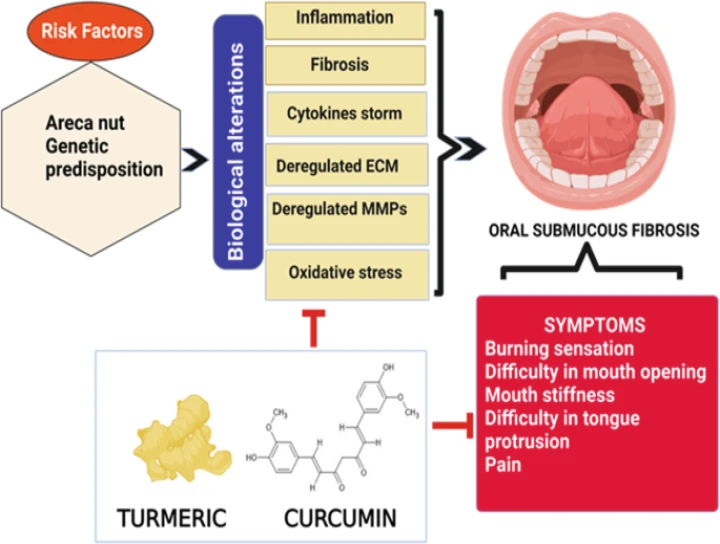
Oral submucous fibrosis (OSMF) is a chronic, progressive, potentially malignant disorder characterized by juxta-epithelial inflammation and fibrosis of the oral mucosa, resulting in stiffness, burning sensation, blanching, and progressive restriction of mouth opening. Areca nut chewing is the principal etiological factor, with nutritional deficiencies, genetic susceptibility, and immunological mechanisms contributing to disease progression. Conventional management aims at habit cessation and symptomatic relief; however, no definitive cure exists. In recent years, curcumin, a natural polyphenol derived from Curcuma longa (turmeric), has gained attention for its therapeutic role in OSMF.
Curcumin exhibits potent anti-inflammatory, antioxidant, antifibrotic, and chemopreventive properties. Its anti-inflammatory action is mediated through inhibition of nuclear factor-kappa B (NF-κB), cyclooxygenase-2 (COX-2), lipoxygenase, and various pro-inflammatory cytokines such as tumor necrosis factor-α and interleukins. In OSMF, these mechanisms help reduce chronic mucosal inflammation and alleviate symptoms such as burning sensation and pain.
The antifibrotic effect of curcumin is particularly relevant in OSMF management. Curcumin inhibits fibroblast proliferation and downregulates transforming growth factor-β (TGF-β), a key mediator in collagen synthesis and fibrosis. It also enhances collagen degradation by modulating matrix metalloproteinases, thereby reducing excessive collagen deposition in the oral mucosa. Clinical studies have reported improvement in mouth opening and mucosal flexibility in patients treated with curcumin, either alone or as an adjunct to conventional therapy.
Curcumin’s strong antioxidant activity plays a vital role in counteracting oxidative stress induced by areca nut metabolites. By scavenging free radicals and enhancing endogenous antioxidant enzymes, curcumin protects epithelial cells from damage and supports mucosal healing. Additionally, curcumin has been shown to improve epithelial thickness and reduce mucosal atrophy, contributing to functional improvement.
Another significant advantage of curcumin is its chemopreventive potential. OSMF carries a substantial risk of malignant transformation. Curcumin inhibits cellular proliferation, induces apoptosis in dysplastic cells, and interferes with multiple signaling pathways involved in carcinogenesis. This makes curcumin a promising agent not only for symptom management but also for reducing the risk of progression to oral squamous cell carcinoma.
Curcumin can be administered orally in capsule form, as topical gels, or as part of combination therapy with antioxidants and physiotherapy. It is well tolerated, cost-effective, and associated with minimal adverse effects, making it suitable for long-term use. Poor bioavailability remains a limitation; however, newer formulations such as curcumin with piperine, nanoparticles, and liposomal preparations have shown improved absorption and clinical outcomes.
In conclusion, curcumin demonstrates significant efficacy in the management of oral submucous fibrosis due to its anti-inflammatory, antifibrotic, antioxidant, and chemopreventive properties. While current evidence supports its beneficial role as a safe and effective therapeutic agent, further large-scale, long-term clinical trials are needed to establish standardized dosage protocols and confirm its impact on malignant transformation.
No Any Replies to “Efficacy of Curcumin in the Management of Oral Submucous Fibrosis”
Leave a Reply