

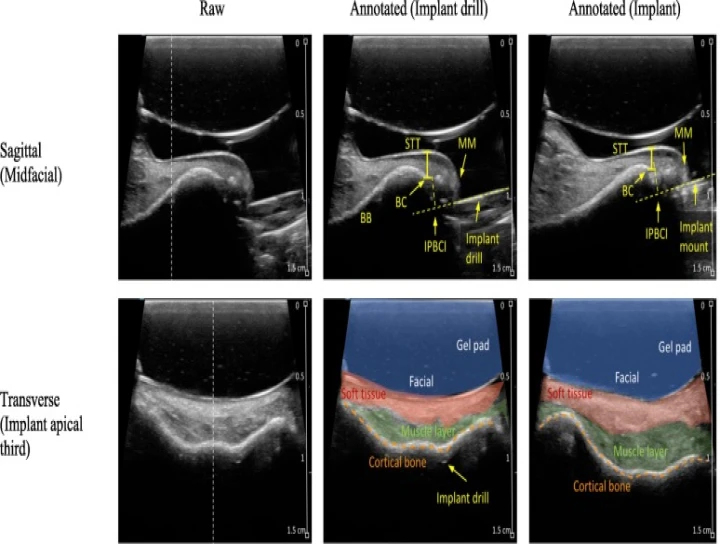
Ultrasonography, commonly known as ultrasound, is a non-invasive imaging modality that has gained increasing importance in oral medicine due to its versatility, safety, and cost-effectiveness. While traditionally associated with obstetrics and cardiology, ultrasonography has emerged as a valuable tool for evaluating various oral and maxillofacial conditions, offering unique advantages in certain clinical scenarios.
One of the primary applications of ultrasonography in oral medicine is the assessment of soft tissue lesions, including cysts, tumors, and inflammatory processes. Ultrasonography provides real-time, high-resolution images of superficial structures, allowing for accurate characterization of lesion size, morphology, and vascularity. Additionally, ultrasound-guided fine-needle aspiration biopsy (FNAB) enables precise sampling of lesions for cytological analysis, facilitating diagnosis and treatment planning.
Furthermore, ultrasonography plays a crucial role in the evaluation of salivary gland pathology. It aids in the differentiation of salivary gland tumors from inflammatory or obstructive lesions, guiding therapeutic interventions such as glandular aspiration or sialography. Ultrasonography also assists in assessing the extent of gland involvement and identifying potential complications, such as ductal dilation or calculi.
In recent years, advancements in ultrasonographic technology have expanded its utility in oral medicine. Doppler ultrasound, for instance, allows for the assessment of blood flow within oral lesions, aiding in the characterization of vascular lesions and monitoring treatment response. Contrast-enhanced ultrasound (CEUS) further enhances diagnostic accuracy by highlighting areas of increased vascularity, particularly in the context of tumor angiogenesis.
Moreover, the development of handheld and portable ultrasound devices has facilitated point-of-care imaging in dental offices and outpatient settings. These compact devices offer convenience and real-time visualization, enabling clinicians to perform quick assessments and guide minimally invasive procedures with greater precision.
In conclusion, ultrasonography is a valuable adjunct to clinical examination and conventional imaging modalities in oral medicine. Its wide-ranging applications, from soft tissue lesion evaluation to salivary gland assessment, make it an indispensable tool for diagnosing and managing various oral and maxillofacial conditions. As technology continues to advance, the role of ultrasonography in oral medicine is expected to expand, further enhancing patient care and outcomes.
No Any Replies to “Understanding Ultrasonography in Oral Medicine: Applications and Advancements”
Leave a Reply